
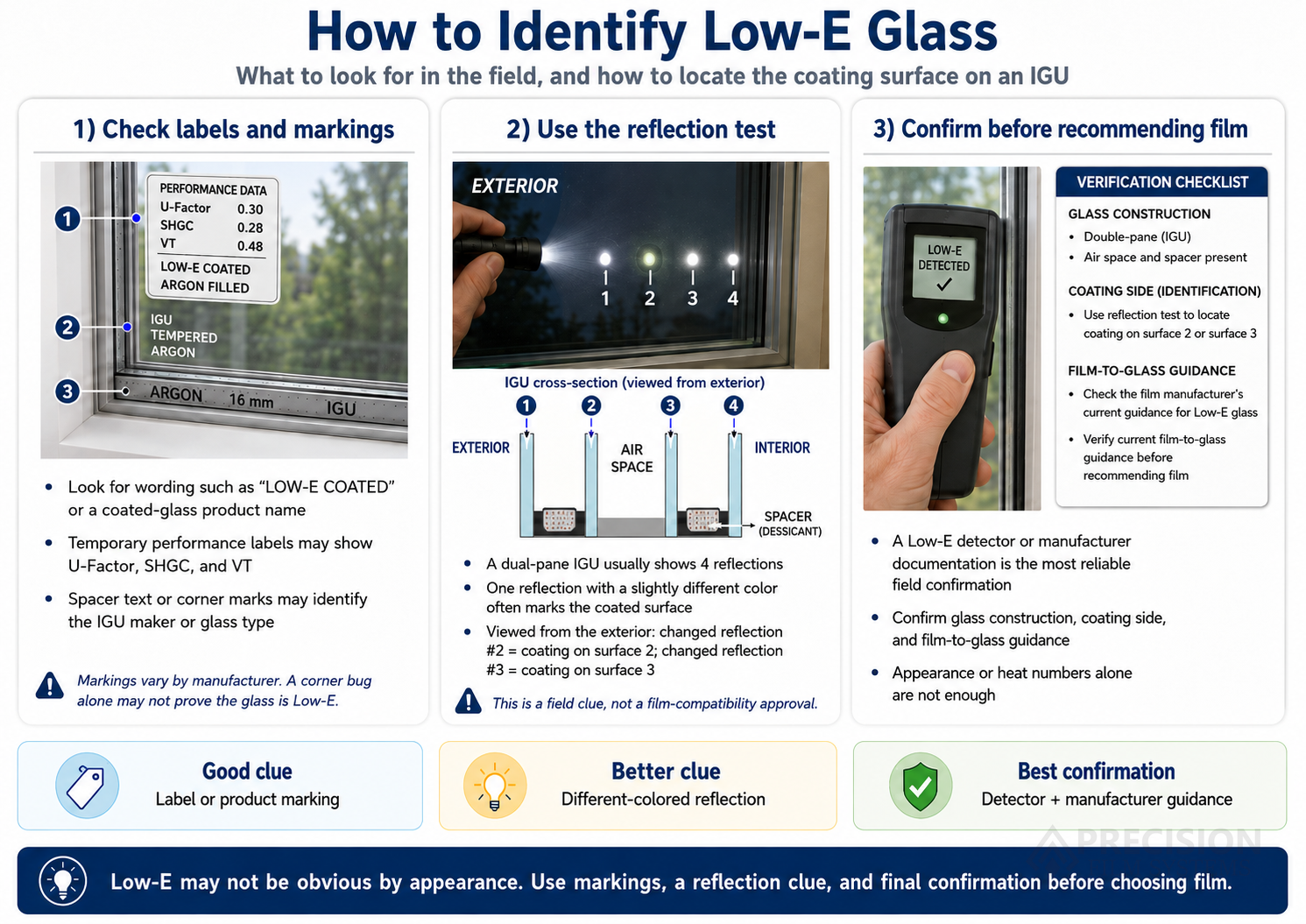
Compatibility awareness is the part of the job where the film choice is checked against the glass and the conditions around it.
This path is not a substitute for film manufacturer approval, glass manufacturer guidance, or technical review. It is a practical place to slow down before a film gets recommended from appearance or performance numbers alone.
What to check before recommending film
A compatibility conversation usually starts with the glass system and job conditions, not just the film spec sheet. The details that matter most can include:
- Glass type, thickness, and whether the unit is single-pane or insulated glass
- Low-E coatings and coating location when known
- Annealed, heat-strengthened, or tempered glass
- Interior or exterior shading, partial exposure, and nearby reflective surfaces
- Film absorption, reflectance, VLT, TSER, SHGC, and manufacturer guidance
- Existing chips, cracks, seal failure, edge damage, or unusual frame conditions
How to use this path
Follow the Flat Glass Fundamentals stage for the related glass and film references.
Start with the Low-E and performance-term articles below, then pair those terms with the job-site notes and planning articles that help keep the glass details visible before the quote or recommendation is finalized.